

Major global indices - the Nasdaq, Bovespa, Seoul Composite, S&P 500, Dow Jones, S&P BSE Sensex, NYSE, DAX, Nikkei and, CAC 40 - have all gained 37 per cent to 75 per cent since their respective March 2020 low.

>It's not easy to predict the market. But there are at least two positive factors to back the PSU banks, explains Tamal Bandyopadhyay.

Investing heavily in a top-performing fund during good times can cause long-term pain. Don't invest lump sum at market peaks.

'Investors should do proper analysis before putting in their money in NFOs as most new launches are in the high-risk thematic space.'

Analysts expect Nifty to rise up by to 6 per cent in six months, with intermittent corrections likely due to global factors.

Retail investors have become a force to reckon with in the last 10 years with their ownership of Indian equities rising 800 basis points, or 8 per cent, to 23.4 per cent during this period, suggests a recent note from Morgan Stanley. This number, Morgan Stanley said, is set to rise in the next few years as Indian households are still underinvested in equities. India's demographics, policy framework, investor education and modest positive real rates, it said, will fuel the 'equity cult' in India.

The story of the Bombay Stock Exchange and the people who shaped its growth: From wars and bomb blasts to speculators, reformers and wealth creators.

'Choose an equity allocation that will allow you to remain invested even if the market falls by 50 to 60 per cent.'

'We expect the bull-market phase to still persist, but now led by large-caps which offer better valuation and benefit from FII inflows.'
'We expect continued pressure on midcaps, but any sharp correction looks unlikely from here on.'

The universe of stocks trading at a 12-month forward price-to-earnings (P/E) multiple of 50x or more has swelled by 2.5x to 104, indicating the growing froth in the market. In March 2023, the number of stocks with a P/E of 50x and 100x stood at 41 and 3, respectively, which has now grown to 104 and 9, according to an analysis by Kotak Institutional Equities (KIE).

'Sectors like e-commerce, small finance, housing finance, and healthcare are in great favour, and people are paying a PEG ratio of up to 5, which is dangerous.' 'Wealth destruction is inevitable.'

'When fund managers talk of being bullish for the long term, they assume strong economic growth.' 'That is what they have assumed every year, naively believing the pronouncements and promises of ministers.' 'Unfortunately, they have been wrong year after year,' observes Debashis Basu, editor, www.moneylife.in.

There are overvaluation and excesses in many pockets of the market. This is most obvious in the IPO market, where loss-making companies have inflicted large losses on investors, observes Debashis Basu.

Domestic institutional investors pumped Rs 2.3 trillion into equities during H1 CY24. Of this, mutual funds contributed 80%.

'If you look at where inflation (headline and core) is today in India and where the rates are, there's clearly room to cut rates.'
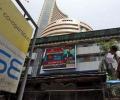
Shares of Tata Group companies on Thursday rose up to 10 per cent, with Tata Chemicals and Tata Teleservices among the major gainers. Tata Sons Chairman Emeritus Ratan Tata, who played a key role in transforming the group into a global conglomerate, passed away late on Wednesday. He was 86. "Investors can pay tribute to Ratan Tata and the great corporate empire he built by buying stocks like TCS, Tata Motors, Tata Steel, Tata Consumer and Indian Hotels.

Average monthly searches for 'bull market' have gone down significantly from May-June peak.

Analysts remain bullish on the road ahead for the equity markets, but warn against volatility on account of domestic and global cues. The upcoming Lok Sabha elections back home and the interest rate trajectory of the US Federal Reserve, they said, will be the two most important factors that the markets will keep a tab on. That apart, the valuation of the Indian markets, they feel, will also be eyed in context of how global peers are performing.

Inflows into sector and thematic (S&T) funds fell sharply from around 5,711.6 crore in February 2025 to about 170.1 crore in March 2025 - a decline of 97 per cent. With many such funds underperforming, investors need to assess whether to remain invested or exit.

Stock markets will be driven by quarterly earnings by index majors, global trends and the RBI's interest rate decision this week after digesting news on budget proposals and US Federal policy outcome, say analysts. The trading activity of foreign investors and the movement of global oil benchmark Brent crude would also dictate trends in equities. "On the domestic front, the MPC (Monetary Policy Committee) meeting is scheduled from February 6-8.

'Geopolitical risks and their impact on oil prices, if any, are another concern for global markets, particularly for India.'

Titan was the top laggard in the Sensex pack, shedding 1.39 per cent, followed by HDFC, Axis Bank, Kotak Bank, HCL Tech and Tech Mahindra. On the other hand, Asian Paints, SBI, M&M, TCS, Bajaj Finserv and ICICI Bank were among the winners, spurting as much as 3.25 per cent.

'Investors should look to incrementally allocate towards equity from a medium-to-long term horizon.'

The markets tend to react six to eight months in advance
Overall market reaction to the Budget was neutral. Investors absorbed the changes to the tax rates (positive for salaried class) and capital gains taxes (CGTs, negative due to the removal of indexation and increases. Other proposals largely pertain to supporting rural development, buybacks taxed as dividends, Custom duty changes that impact multiple sectors, higher outlays for clean energy, etc. There's some moderation in the growth of capex outlay across defence, fer

Global trends and trading activity of foreign investors would largely dictate terms in the equity markets this week amid a lack of major domestic triggers, analysts said. Markets may face near-term consolidation due to elevated valuations, they noted. "While the previous week was predominantly shaped by developments in the US Federal Reserve policy, attention will now shift to the Bank of Japan's policy decision on December 19," Santosh Meena, Head of Research, Swastika Investmart Ltd, said.

Average residential property prices in seven cities increased 10% to 34% due to new supplies in the luxury and ultra-luxury segments and overall demand.
The risk-reward for the Indian markets, Morgan Stanley said, is turning favourable.
Many factors responsible for investors' interest in India are now rapidly receding.

Ask rediffGURU and PF and MF expert Janak Patel your mutual fund and personal finance-related questions.

Abhishek Bachchan's sneering expression is ill-quipped to convey the confidence of a wheeler-dealer. Those frequent bouts of muahaha make it worse. So much worse, says Sukanya Verma.

India will be the world's third-largest economy by 2028 as it becomes the world's most sought-after consumer market and gains share in global output, driven by macro stability influenced policy and better infrastructure, Morgan Stanley said. From a $3.5 trillion economy in 2023, the Indian economy is projected to expand to $4.7 trillion in 2026, which will make it the fourth largest in the world behind the US, China and Germany.

'Asset allocation should change only if your goals, life situation, or risk profile have changed.'
Emerging market equities have delivered stellar returns over the last few years, outperforming their developed market peers since this new bull market began in end 2002.

'If weak indicators persist, there is a risk that India could slip into a prolonged slowdown similar to the one experienced between 2014 and 2019,' warns Debashis Basu.

It's the first time in my memory that I have seen a negative expected return for equities, notes Akash Prakash. Hopefully, this implies the consensus is being too negative, and markets, as usual, will surprise everyone and deliver the least likely outcome.

'New record for the Nifty50 is only a question of when.'

From the Sensex basket, Tech Mahindra, Tata Steel, JSW Steel, HCL Technologies, Tata Consultancy Services, Larsen & Toubro and Kotak Mahindra Bank were the biggest laggards. Mahindra & Mahindra, Power Grid, Bajaj Finance, IndusInd Bank and Maruti were the major gainers.
